
I was arched over the side of the guest bed in my brother’s house, legs crossed, typing on a slim laptop stand that wobbled against the carpet. My self-proclaimed perfectionist manager had just sent back the slide deck I’d prepared for our meeting with a company in Edinburgh.
The email arrived with a scrollable list of changes – most of them microscopic. Formatting preferences. Comments about “not using blank space.” It was the corporate equivalent of you’ve missed a spot, and the more I scrolled, the more the spot began to feel like me.
I couldn’t shake the suspicion that the timing wasn’t accidental. The meeting was the next morning and she was aware I had a 2 hour journey ahead. She knew I’d have to make the changes outside my contracted hours and had I not checked my emails, I feel like she’d have made sure I faced her wrath. So I made the edits with one question looping in the back of my mind the whole time: what is the purpose of all this?
In the June morning sun, I rushed towards the train, sandals slipping against sweat. Just as the carriages drew near, the leather strap snapped from the buckle. I limped onto the carriage, taking a seat near the back and began crying into my shoulder, indulging briefly in a quiet woe is me.
The year painted itself in front of me: I had just returned from a period of sickness. In the span of a year, I had moved four times – ended a dangerous tenancy, moved back in with my parents, watched them sell their house, and then landed in my brother’s spare room ready to quit my job. Home had no meaning to me. Adulthood felt like something I was performing.
The Monk & The Fool
As I hurried between Glasgow Central and Queen Street, toes gripping for dear life onto my sandals, a monk in an orange robe approached me. He met my eyes with a kind smile and told me I had good energy. At that moment in my life, I wanted so badly to believe in good things. He placed a bracelet around my wrist and gestured for payment. I gave him the small change in my purse. He closed his fist around it and removed the bracelet without a word. I stood there dumbfounded as he disappeared into the crowd, humiliated by how quickly my hope had turned to spectacle.
On the train to Edinburgh, the world felt like a Goliath with me in its grip – toying with me, mocking me for being so unflatteringly human. I was embarrassed to be alive: just a naïve little island girl who couldn’t keep hold of a flat, a job, a sandal strap. And on the surface, that is exactly what I looked like.
I arrived at the meeting with time to spare and delivered the presentation, feeling the burning eyes of my manager as I choked on almost every word. As we took our lunch break, I seized the opportunity to escape to the bathroom and dry the sweat patches that had formed on my shirt. I caught my reflection in the glass and in that moment, I felt like if I was glass – I’d shatter.
When I returned, I caught up with my co-workers over food and I mentioned the story of the ‘monk’. Those few hours that passed felt like enough time for me to have a light hearted laugh with everyone about it. Everyone except my manager, who whipped her head round and with narrowed eyes scoffed: “That could never be.”
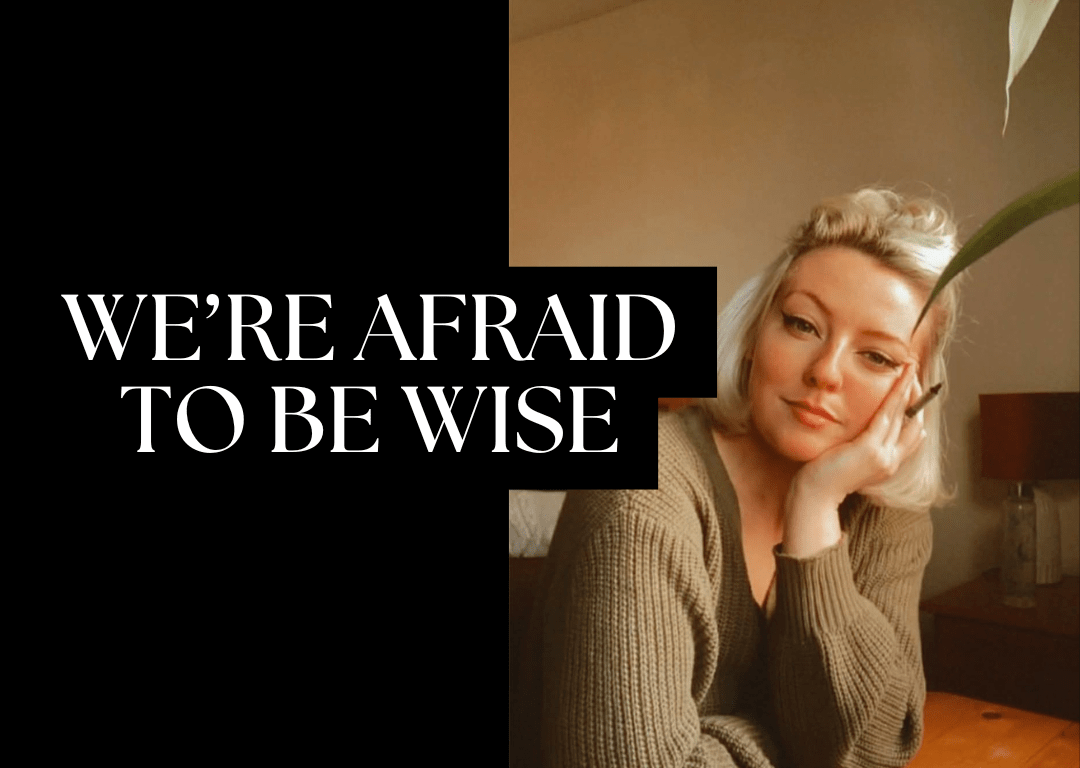
But the truth is: that was you. That was her in her 20s. Not that exact scenario. Maybe not that exact age. But the very same principle.We’ve all been the fool. And I realised that day that the most dangerous people are the ones who pretend they haven’t. Maybe we’re not afraid of being foolish at all. Maybe we’re afraid of the vulnerability and humility that foolishness requires of us in order to become wise.
That Could Never Be Me
It says: I’m above you. It says: I was born wiser, cleaner, less fallible. It implies that wisdom comes pre-installed, not awkwardly assembled through countless missteps. It skips the necessary building years – the ones where we all inevitably fuck up. It turns naïvety into a moral failure instead of a process of becoming, that none of us who have experienced the mess of our 20s, are exempt from.
Now let’s be clear – this wasn’t about me being a victim of the world. It was about failing in front of an audience, and instead of being met with alliance and grace from those who had once played the fool too, I was met with arrogance, shame, and superiority. Shame that I internalised for some time thereafter.
What I know now is that my 20s were not a referendum on my capability. They were an experiment. A crash course in everything that could go wrong and see who I become as a result of that. I rushed into a graduate job dazzled by a wage that outshone all purpose and meaning. I signed a lease littered with red flags because independence looked like adulthood. I performed the cool girl until I was ice cold, and my body was the first to revolt – seizures, migraines, exhaustion.
I played the ‘girlboss’ role so well. I was deep in layers of leather jackets and irony. The instagram pictures of pathetic ‘girl dinners’ and wearing sunglasses to hide how hollow I had become. I was ashamed of my sensitivity, what I was told was the root of all naïvety, so I turned myself to stone. My entire being eventually revolted against this life because it was never my own. And all the while I thought I was building a successful adult life, I was building it from the wrong place.
The fool says: I care about how my life looks. Wisdom says: I care about how my life feels. But you don’t get wisdom without first playing the fool.
Intellect vs Experience
“The degrees themselves hold less meaning to me than the experience of university itself,” I said to my mum in the midst of a job search. She was taken aback. “You worked hard for those degrees – don’t undervalue yourself.”
But it wasn’t me I was undervaluing, and it wasn’t the degrees either. I just valued the experience of university more. Any graduate in the throes of a job search right now will likely understand what I mean. From my experience – 200+ job applications later -degrees do not hold the same value they once had. And I don’t think that’s inherently a bad thing. I think it forces us to reassess where, collectively and personally, we’ve been placing value – and why.
As I sit here now, I cannot recite more than a handful of academic lessons that truly altered my perception in the 5 years of an undergrad and masters. But I can tell you about the first time I took a bus on the mainland and didn’t know where to tap my card.
The awkwardness of moving into my first shared flat with three strangers. The time I got fired from my first waitressing job because I didn’t know how to pour a pint. Sitting in the basement of my barista job, drinking my own failed attempt at a cappuccino after being yelled at in front of the shop. Meeting the Chuckle Brothers in a photo booth during freshers’ week and asking them to get out because I didn’t know who they were. The first food shop where my card declined, and the humility of fumbling through my phone to call my dad.
These are the overlooked treasures, rich with meaning. These are the markers of a life being well lived. But these are the same ones that we are taught to hide and to be ashamed of.
The Fool’s Purpose
When I resigned from the job search for the final time and decided to walk the road less known, I came to understand one thing: for all my visible losses, I have silently gained.
Everyone saw me give up my flat, quit my job, move back to my hometown. What they didn’t see were the quiet years – where you realise you prefer oat milk over cow’s milk. Where you spend hours watching birds out the window and think, oh, I didn’t know I had an interest in that. The first time you climb a hill and feel the wind batter against your face at the top and think, this is what makes me feel alive. The afternoons sitting by rivers when, like a raindrop, the first line of a poem trickles into your awareness and you feel electric.
The summers where I discovered I adore slow mornings and fruit for breakfast. Where I decided never to schedule appointments before noon because mornings are something I now protect. The years where I spent long enough with myself to think: maybe I do like pink. Long enough journaling to ask why I people-please, why I’m so afraid of being seen — and to arrive at honest answers. The years where I began pulling out the weeds.
I stayed with myself long enough to realise: maybe I don’t want a job. Maybe I want a vocation. Maybe I don’t like the city. Maybe I don’t like late nights. And what is wisdom, if not the moment you stop pretending that you do?
Because you’re no longer afraid of trying. You’re no longer afraid to be a fool. These are the quiet years that matter. The years where you stow away wisdom like nuts. Where you turn lead into gold. And she who curates the time to know herself, inevitably, becomes her Self.
So, no.
Against all external pressures, opinions, and varying metrics of success, I won’t feel shame for not wanting a traditional job. Or for being deeply sensitive. Or for giving up my flat and moving back home. I won’t apologise for the mess in the lab because the mess in the lab has been the overlooked solids that have formed my unfaltering foundations. They are the principles and values that I now check myself against in every area of my life.
No fulfilling and meaningful life has ever come from colouring within the lines and I got so tired of pretending it did. I will continue to fall in deep love with this messy human experiment during my limited time on this Earth. I will continue to fuck up and fuck up honestly.
Because when that final curtain is called, one truth will still remain for me –
I’d rather be an honest fool than a perfect fraud.
Discover more from
Subscribe to get the latest posts sent to your email.
 ailsagillies.com